
Conference Proceedings
Deinstitutionalizing Independence: Discourses of Disability and Housing in Accessible Computing

Kevin M. Storer, Stacy M. Branham
This research reveals a critical tension within Accessible Computing, where the goal of promoting “independence” for disabled people at home is often undermined by design approaches rooted in the historical logics of institutionalization. By analyzing 101 academic articles, the paper calls for a new direction guided by the Independent Living Movement to create more holistic and anti-ableist technologies for domestic spaces.
Download here.
“It’s Just Everything Outside of the IDE that’s the Problem”: Information Seeking by Software Developers with Visual Impairments

Kevin M. Storer, Harini Sampath, M. Alice Merrick
While much attention is given to making coding tools accessible, it’s less understood how developers with visual impairments navigate the complex process of seeking technical information from various sources like documentation and forums. Through observations and interviews, this study found that true accessibility barriers are not just in the code or on the page, but are deeply tied to the social and contextual factors of the information-seeking journey.
Download here.
“All in the Same Boat”: Tradeoffs of Voice Assistant Ownership for Mixed-Visual-Ability Families

Kevin M. Storer, Tejinder K. Judge, Stacy M. Branham
While Voice Assistants (VAs) are known to be highly valued by people with vision impairments, this research explores how they are used in homes shared with sighted family members. The study found that although both partners recognized similar benefits and drawbacks, the universal design of VAs introduces complex trade-offs for the family, forcing them to weigh significant accessibility gains against impacts on their relationships, domestic labor, and safety.
Download here.
“That’s the Way Sighted People Do It”: What Blind Parents Can Teach Technology Designers About Co-Reading with Children

Kevin M. Storer, Stacy M. Branham
To better understand how technology can support co-reading, this study explores the practices of parents with visual impairments, a group with unique and valuable insights into literacy. By analyzing discussions in a blind parenting forum, the research found that co-reading strategies are highly diverse and influenced more by factors like Braille literacy and social support than by vision itself.
Download here.
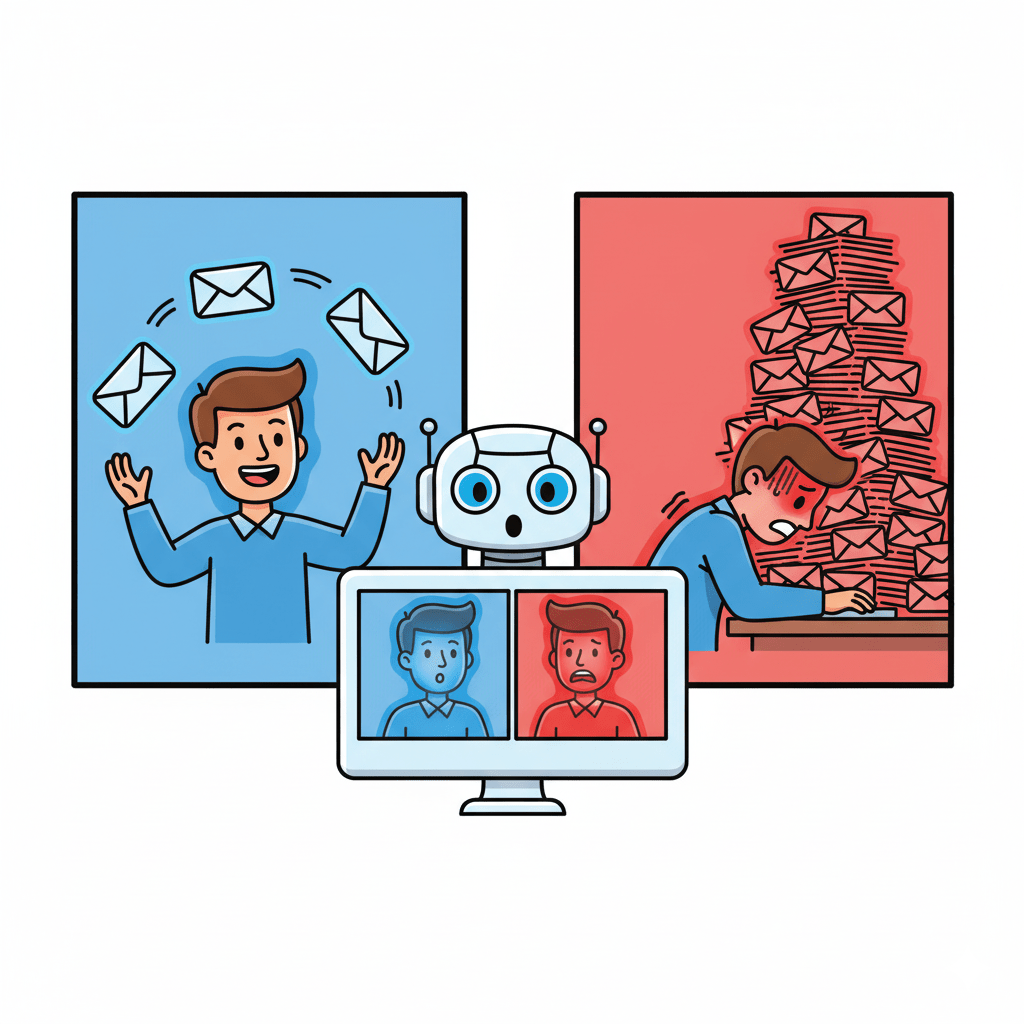
Email Makes You Sweat: Examining Email Interruptions and Stress Using Thermal Imaging
Fatema Akbar, Ayse Elvan Bayraktaroglu, Pradeep Buddharaju, Dennis Rodrigo Da Cunha Silva, Ge Gao, Ted Grover, Ricardo Gutierrez-Osuna, Nathan Cooper Jones, Gloria Mark, Ioannis Pavlidis, Kevin M. Storer, Zelun Wang, Amanveer Wesley, Shaila Zaman
To objectively measure stress from workplace interruptions, this study used thermal imaging to detect stress in response to different email management strategies for people with different personalities. The research discovered that individuals high in neuroticism become significantly more stressed when batching emails compared to facing constant interruptions, and this higher stress correlates with faster, angrier email responses.
Download here.
Timely Execution on Intermittently Powered Batteryless Sensors

Josiah D. Hester, Kevin M. Storer, Jacob M. Sorber
Programming tiny, batteryless sensors is extremely difficult because their intermittent power supply constantly erases memory and resets progress, forcing developers to focus on failure recovery instead of the actual sensing task. To solve this, the Mayfly language and runtime were created to automatically manage these interruptions, weaving together fragments of execution across power failures to ensure data remains consistent, timely, and useful.
Download here.
Amulet: An Energy-Efficient, Multi-Application Wearable Platform

Josiah D. Hester, Travis Peters, Tianlong Yun, Ronald Peterson, Joseph Skinner, Bhargav Golla, Kevin M. Storer, Steven Hearndon, Kevin Freeman, Sarah Lord, Ryan Halter, David Kotz, Jacob M. Sorber
Most wearable devices suffer from battery lives lasting only hours or days, which severely limits their potential for running multiple applications over long periods. The Amulet Platform solves this problem by providing an entire ultra-low-power hardware and software framework, enabling developers to build apps on a prototype that achieves a battery life measured in weeks or even months.
Download here.
Journal Articles
Blind Leading the Sighted: Drawing Design Insights from Blind Users towards More Productivity-oriented Voice Interfaces

Ali Abdolrahmani, Kevin M. Storer, Antony Rishin Mukkath Roy, Ravi Kuber, Stacy M. Branham.
This research investigates how blind adults use voice-activated personal assistants, uncovering myriad accessibility challenges and a desire for more productivity-oriented features through interviews and podcast analysis. The study concludes that blind individuals are expert voice users whose early involvement in the design process can lead to better interfaces that benefit both sighted and blind communities.
Download here.
 Kevin M. Storer, Ph.D.